Category Archives: words

First #neweconomics event with @johnmcdonnellmp

A couple of weeks ago, John McDonnell MP, the shadow chancellor, announced that he’d be organising a series of events on New Economics to “broaden the debate around economics in Britain.”

I booked up for the first four in London straight away. The first lecture was last night at the Royal Institution. It was good, I heartily recommend you getting along to others in the series if you can. I had a few reactions to it that might be expected by regular readers here.

  1. I’m not very good at lectures. Mariana Mazzucato was a great speaker in that unstoppable Italian-American way. And I stuck it to the end, but it was a hard exercise in concentration for me. That aside, I’m left wondering if it was worth it – one person talking for an hour, even jumping around her slides, is something I can watch on YouTube and I get to pause it to have a cup of tea and a think half way through.

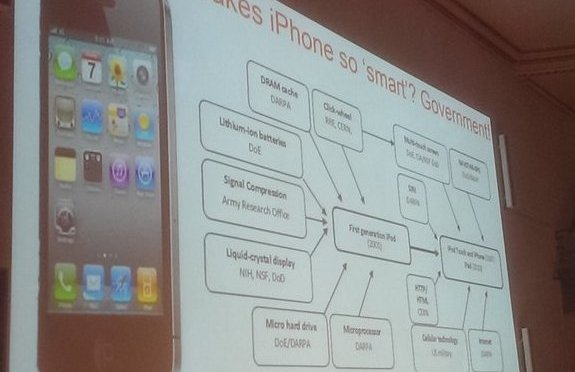
  2. I’m not very good at Economics. I spent a good deal of my second year at University rebelling against having to do Economics 101 and I’m very glad to say that last night had no mention of inelastic pricing, but I was on my guard for long explanations of this model versus that model. I’m glad I got to hear what she had to say (big takeaway: don’t forget that all of Silicon Valley’s invention is built on the foundations from large publicly-funded programmes [DARPA, NASA, CERN etc]) but I had to work hard for it (probably a good thing).

  3. I’m really not good at post-lecture Q&A. There may be some people who enjoy it, who get to hear things they didn’t hear before, but I don’t think that justifies the mic-hogging and mansplaining and all of us having to sit through another half (if we’re lucky) hour of one person speaking at a time.

I came away really wanting to know who else was in the room (other than Jeremy Corbyn) and what they thought. And what all of this was doing to “broaden the debate”. I may just be being impatient. Let’s see what the next one (on Tech & the Future of Work) is like. I’d much rather have some Open Space/Unconference events where people really get to talk about this stuff and we all have an experience we couldn’t have had through a screen.

Which ties in conveniently with two evening events I’m doing in February at WeWork on the Southbank! After the Future of Work spaces we did before Christmas, I wanted to continue the conversation but with a more practical angle. So rather than talking broadly about new technologies, I’m asking “What are we actually going to do?”

You can book on Eventbrite:

Future of Work: What are we going to do about Artificial Intelligence?

and

Future of Work: What are we going to do about The Internet of Things?

See you there if not before!
 

Ten years of online video

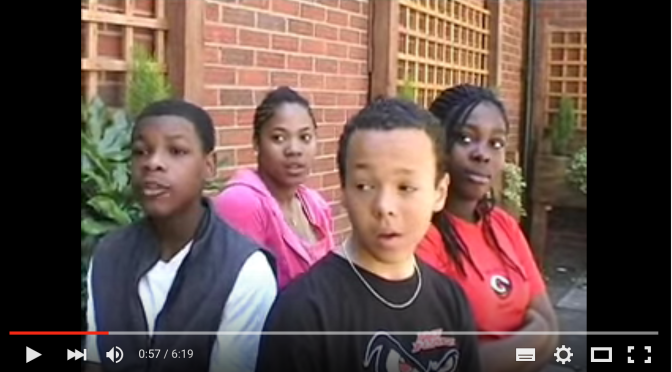
Last night, someone commented on an old video of mine on YouTube. It was from some work I did in 2006 making content for a site supporting a consultation around education for the creative industries. That’s as much as I remember really. Mostly it was talking to “grown-ups” about what “skills are needed by industry” but I also got to go down to Peckham and interview a bunch of young people about their experience of Theatre Peckham (then known as New Peckham Varieties).

The commenter had said “Omg is that John boyega 😭 so happy for him” And so I had a look and yes, about one minute in, there’s a fourteen-year-old future Finn looking surprised to hear that not only had Sir Ian McKellen worked in the West End, but also that he was in the (then) new X-Men movie.

Go on, watch the whole thing. He pops up later too. If you spent any time around theatre when you were young, you’ll recognise yourself and your peers in there somewhere.

It made me realise that I’ve been on YouTube for nearly ten years. 2006 was the year it all got going. At the start of the year it was some experiment that guys at PayPal were doing, I joined in the March (but didn’t fully commit to only posting video there till much later – hence the broken video links in some of my posts!) and by the end of the year it had been bought by Google. And still people were saying video on the web was just a fad 🙂

It might be time for a retrospective!

Future of Work: Virtual & Augmented Realities with @evapascoe

Eva Pascoe came and gave us some insights particularly into recent uses of Virtual and Augmented Realities in retail.

Discussions afterwards included:

  • Do we need physical body to commune with others?
  • AR/VR very different
  • How immersive does the reality have to be to be virtual?
  • How will we avoid aggravating the Digital Divide?  (ie that those who do not have the technology access to the technology become left behind. VR on NHS?
  • (Virtually) When tomorrow is as immersive as today, how will we know what is real?
  • Getting Lost
  • Learning to see our hands in VR.  VR adapting to us.  Embodiment & VR
  • How do you know you are not in VR now?!
  • Will we be able to interact with other real things in the virtual way? If so what does that mean for our future?
  • The visual/sound bias – not immersion for physical beings until touch, smell, taste?

At all of these sessions, we’ve ended in a circle asking people to record their reflections.  Listening to this should give you a better feel of what it was like in the room.

If you were there and have written about the experience, do let me know.

Future of Work: Drones, Robots & IoT with @priyascape

Priya Prakash from Design for Social Change came along to our third Future of Work event at Truphone to talk about how work might change when some of our colleagues are a network of sensing machines talking to each other.


Discussions that followed included:

  • IoT: Main uses in the next 10 years
  • Knowledge Management & Human to Human Interaction
  • What makes us human? What is human?
  • So what do *you* think will be the impact of IoT on the future of work?
  • Where are the lines between living & working?
  • What’s the future of design in this context?

At all of these sessions, we’ve ended in a circle asking people to record their reflections.  Listening to this should give you a better feel of what it was like in the room.

If you’ve written something about the evening or inspired by your conversations, do let me know.

Future of Work: Blockchains with @imogenheap

We started the second Future of Work event with an introduction to Mycelia from Imogen Heap.  If you haven’t read it yet, the two-part interview she did on Forbes is a great starting point.  In a nutshell, she calls it “Fairtrade for musicians”  it’s intended to be a way of using smart contracts on the blockchain to manage metadata about an artist’s works (including that important metadata about price and how money gets distributed after each sale).

The discussions afterwards included:

  • Blockchain as a method of trust
  • How do we make Mycelia a foundation & make money for itself?
  • Autonomy embedded
  • Money creation on the blockchain
  • Beacon Music App
  • Mobile Blockchain
  • Does Technology democratize or amplify differences in Human Power Relationships?
  • Crowdsourced Artistic Market?
  • What is the Finance Industry?
  • Scaling and Sequestration
  • Distributed Identity
  • UI & UX How do we interact with the blockchain. Author User
  • Devising Gaming Mechanics on the block chain (Educational)
  • The Musician Development Bank
  • Fair Trade Music Light!
  • What is the overhead of running a blockchain system to record all, say FX transactions or all music plays

We finish each evening with a circle where we pass around an audio recorder to capture people’s immediate reactions.  Have a listen to get more of a feel for what it was like in the room.

If you were there and have written anything about the evening or inspired by your conversations, please do let me know so I can spread the word.

Future of Work: AI – with @benjaminellis

This was the first of a series of evenings at Truphone looking at the future of work in the context of four currently maturing technologies.  We started off with a focus on Artificial Intelligence and were given a great overview by Benjamin Ellis of Redcatco.

Discussions that followed included:

  • What happens when the AI is wrong?
    Social Machines (where/how/what)
  • The social acceptability of AI decisions, even if they are better than human ones
  • I want IRON MAN’s suit!
  • AI & Regulation Self/Gov
  • Are we driving AI… or does it drive us?
  • Why AI? Are we creating stuff because we can or because it adds to the human condition or…?
  • UIs How do we talk to them and them to us? How do they sell their ideas? Spectrum from Sound Hound to C3PO to HAL
  • If a machine/AI does something bad (kills someone) who is responsible? The owner, the manufacturer, the programmer or the victim?
  • What will we be using AI for in the next few years? What can I use it for now?
  • Is AI artificial ie not human?

We finish each evening with a circle where we pass around an audio recorder to capture people’s immediate reactions.  Have a listen to get more of a feel for what it was like in the room.

David Terrar did a write up for the Agile Elephant Blog.  If you were there and have written anything yourself, do let me know and I’ll add a link.


Future of Mobile AI with @jamestagg @truphone

Last Thursday, we kicked off a series of evenings at the offices of Truphone with James Tagg leading a romp through the current thinking about the future of artificial intelligence in the context of mobile, ie “When will your smartphone be smarter than you?”

We then went into a short open space session with people suggesting conversations about “How & when the laws of robotics will apply to smartphone AIs”, “How can AI be used for creating world peace?” and “What does the AI world really look like in 2025?”

I managed to catch a few snippets of the conversations:

The format worked well, here’s audio of the final circle (a sentence or two from everyone who wants to) many people said it was very refreshing and stimulating to have a chance to talk about what they wanted to talk about while also having plenty of time to quiz James.  Last night we returned to Artificial Intelligence again, but this time, helped by Benjamin Ellis, looking through the lens of the Future of Work (which is the overall theme for the four remaining sessions) and after that come Blockchain, Drones Robots & IoT and Virtual/Augmented Realities. Do join us!

Ethereum #Devcon1 Day 1

12194850_10156152534235697_3489534277009311602_o//embedr.flickr.com/assets/client-code.js
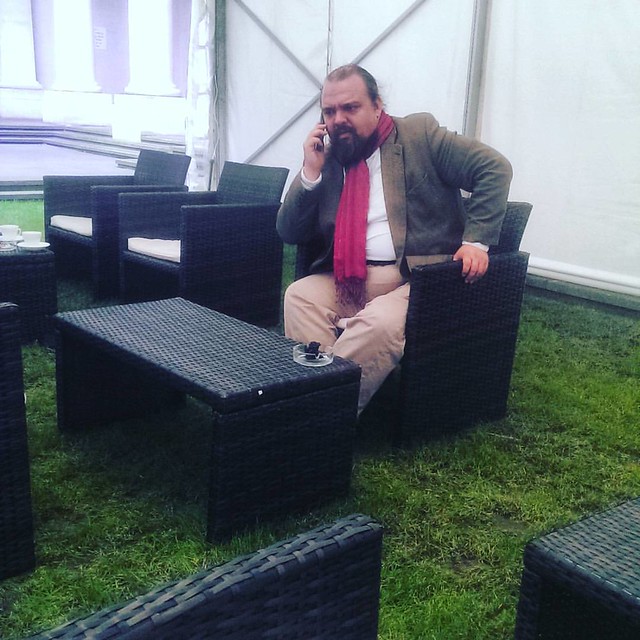
I’ve dropped in to the Ethereum Devcon1 at the Gibson Hall, slap bang in the middle of the City – at the junction of Threadneedle Street and Bishopsgate.  And Vinay and I sat in a marquee on the lawn (how surreal was your morning?) until we reckoned it would be more comfortable in the “Black Bar”.  I’m there now.  I ducked out of the session on “Monads and Comonads”. Because.

I’m mostly interested in the social and economic effects of blockchain tech especially the coming wave of white collar automation, so please piing me if you’re here and want to have a chat.  i’m not on-site all day every day but I will be dropping by regularly.

#futureofwork evenings at @Truphone in November(ish)

As well as the sessions in Leeds, Helen and I are organising a series of events on the Future of Work and emerging technologies with our friend James Tagg of Truphone (his was the farm where we did Hacklands).

The subjects are the four areas that we’re focusing on at Tuttle these days with an emphasis on how they’re changing the world of work:

Artificial Intelligence – 10th November
Blockchains – 19th November
Drones Robots and the Internet of Things – 24th November
Virtual & Augmented Realities – 1st December

All the events are happening at the Truphone offices on 21st Floor of 25 Canada Square and since the clocks will have gone back by then, you’ll see the night-time version of the view of Docklands and beyond.

However, it is the conversation you will come for!  We’ll have a couple of contributions to kick things off at 6pm but then we’ll get into Open Space and you get to talk about what interests you.  Here’s some more blurb:

“Our relationship with work and technology is complicated.  We strive to reduce the difficulty and danger of work for people, but we want to keep our jobs-based economy.  For many people, work gives meaning to their lives and yet they hate their job.

In this series, we’ll be looking at the gap between advances in technology and our social capacity to deal with them, especially in the context of how work is changing.”

Also if you’re interested in this stuff, but not already a member of the Tuttle Group on Facebook, you should join.