
Locational Promiscuity

I've been on the road for eleven months now.  And as the anniversary approaches and I'm more and more able to say "I've been doing this almost a year" the reactions of others (and my own feelings) have moved from "Yikes! That's scary" to "OK, so it seems to work for you, that's interesting".

One of the things that comes up regularly is the idea that I'm travelling through my network, through people rather than places.  It was one of the big learnings for me from #PLATE11 and it's continued to be an important insight.

It's not that I don't like the places I've been or that I'm not interested in seeing new sights, it's that the people are much more important to me.  My commitment is to the people in my network (that's a horrible way to talk about acquaintances, colleagues, friends and family, but still) not to any one place or space or house or community.

It helps me to think about it in the frame of interpersonal relationships.  I think that what's happened is I've let go of the idea of a long term, exclusive relationship with one place, one set of rooms in a fixed location, one group of people who share that space.  I can't be married to a postcode anymore.  I get more out of being able to move between them.  And i'm able to give more too, but it does mean that my community work is distributed, not concentrated in one place and sometimes I make that mean that I'm not doing anything valuable, because there's little to show for what I've been doing, but I think overall that I'm actually more effective.

I hope that they all know that they're all special to me, but that I can't, at the moment, stick with any one.

And I expect that, having noticed it and written about it, it will probably change.

PS If I heard anyone talking about their intimate, romantic relationships like this, I'd say they were kidding themselves. That it would ultiimately lead to too much pain and confusion. What's the difference?  Is it something to do with places not being people? Am I kidding myself?  How would I know?
Originally posted on Lloyd’s posterous

Transcription

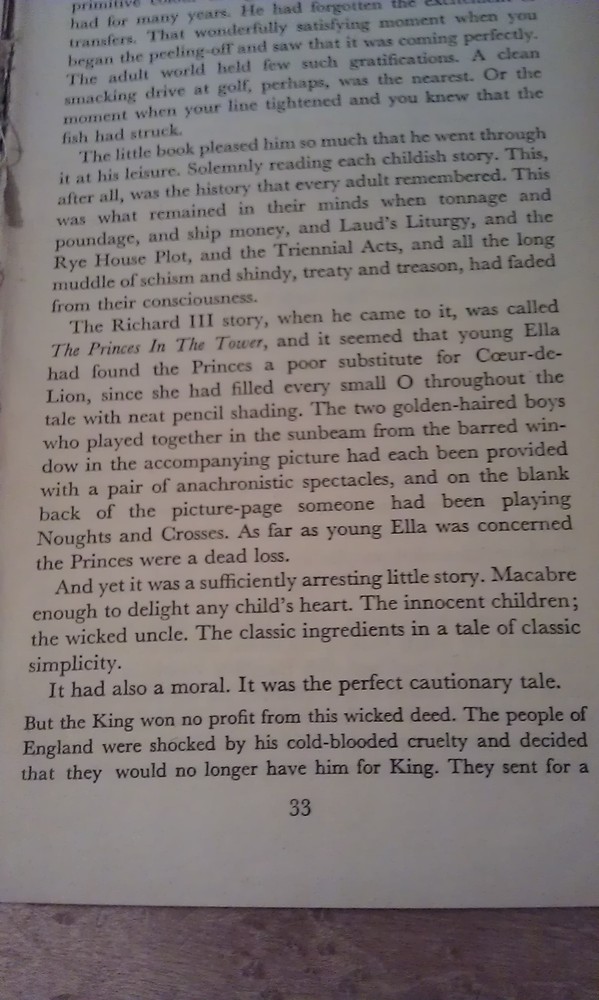
Imag0614

"certainly had a massage to the square the bright come to colur brought back is childhood is nottingham for many yearshe had forgotten the excitement of transfers wonderfully set timer me when you began the king of unsalted viscum perfectly the adult world health use of patientsthe queens drive golf perhaps with the nearest of the moment when you're lying titan the new nude fish instructor   the little book complete im so much that she went through to see later solemnly reading each other story this are tall was the history get every adult women this was what remained mm einstein college pound it and ship money and loads liturgy of the wright house plot and try a packed and all belong model of schism cindy treaty treason had faded consciousness the richard the third storey when he entered is called the princes in the tower anything yung l a handprints is a poor substitute for cuddling up since she had field everest mall 0 drop tail with me to pencil shading goto golden haired boys who play together and some beans in the pod window company picture has been provided eat with a pair of a mechanistic spectacles and on the blank back to pay someone to be playing crosses if I was young I was concerned printers were dead loss and yet it was a sufficient lead arresting little story macabre enough to be like to meet at heart the innocent children the wicked uncle the classic ingridients mattel classic simplicity it also had a moral to cook the perfect host hotel"

Originally posted on Lloyd’s posterous

Time/Image, Tuttle, C4CC & the British Council Film Collection

I'm trying to write about this, but I keep seeing films that I haven't watched yet and am getting lost in the joy and excitement of it all.

I just saw this and nearly wet myself…

There was a launch event at the BFI Southbank last night and we got to see four films on the big screen of NFT1.  I'm enormously proud of what Sam, Sarah and Harry have done to get this project this far. They've gone far beyond my expectations in a very short time.

I think it's worth telling the story as I experienced it, "Success has many fathers… etc." but I really do think we were in at the conception 🙂 

It started in one of the conversations we did with Counterpoint and British Council folk all the way back in the summer of 2009, when we were trying to find social objects through which the council could engage digitally, someone from the Council said "Well we've got those old films in the archive…" and we pounced.  Al Robertson and I had the great pleasure of sitting and watching a large number of the films directly on the gorgeous Steenbeck machines of the BFI and Al went and scoured the National Archives and wrote some lovely blog posts about it.  There was a brief hiatus until Catherine Fieschi brokered a conversation with Martin Bright to get New Deal of the Mind in to form a team of young, unemployed graduates to work on getting the archive digitised and online for a wider audience.  Quite early on, they managed the coup of getting Google involved in funding the digitisation process.  I very much enjoyed running an Action Learning Set for the team, getting them together every month at the Centre for Creative Collaboration to discuss what they were learning from working together and from working with large, well-established organisations like the Council, the BFI, Google and New Deal of the Mind.  Brian Condon and I were really pleased when they said that they'd like to come and carry out their work at the Centre and I was thrilled when, after our final Action Learning Set meeting, Sam and Sarah told me that they were going to create a company to carry on with the work and to branch out into helping other archive owners.  

To me, Time/Image is one of the big stars of the Centre – I think they demonstrate the best of what we've achieved over the last couple of years, quietly getting on with it, playing a full role in the life of the building *and* creating bloody good work, resulting in something that I had great doubts could really be achieved given the political complexities of the organisations involved – I'm particularly impressed that the films in the collection are released under a Creative Commons Licence, which means that you (yes *you*) can download the films and re-use or re-mix them however you like as long as you fully attribute the source as the British Council Film Collection, you don't make commercial use of the film and you release any new works under the same licence. 

I'd prefer a simple BY-SA to the BY-NC-SA (I understand that might have been a step to far) and I'm a bit disappointed that the films seem to be watermarked with the BC logo which might make some re-mixing efforts tricky, but you can't have everything…

I was encouraged last night by seeing that Briony Hanson the (relatively) new Director of Film at the BC seems to have fallen in love with the collection as whole-heartedly as I have. Look out for some creative ideas around re-use of the archive later this year. 

And if you'd like a pop-up cinema presentation of any of the films, just give me a shout and I'll happily come and show them in your village hall/community centre/front room.

Originally posted on Lloyd’s posterous

Open sourcing public transport timetable software

I had a frustrating episode the other day trying to work out a three-way journey round Birmingham.  I wanted to know how to get to a given address by bus from the city centre.  In fact, what I'd have really liked would have been to know what the best journey was from where I was starting off.  And to have a reasonable idea of how long it would take.  This is something I've become used to being able to do easily in London, using TfL's journey planner. Birmingham is a smaller city.  And it doesn't have the rich mix of transport types – there are trains and there are buses.  No tubes, trams or DLR to deal with.  

However, online timetabling for buses is run by National Express and the interface is primarily focused on bus routes rather than point to point navigation.  That is, you have to know which bus route passes near to where you are now and which ones pass the place that you're going to and then you have to look up to see where you might be able to join them up.  This might mean you have to go into the city centre, but if you're in the south of the city and you're going to the west, then perhaps there's one that cuts out the need to crawl into the middle of town.  In any case, it requires a better knowledge of city-wide geography than most locals have let alone visitors or, say, people who were born there, but haven't lived there for nearly thirty years.

Messing with the structure of transport providers, public ownership or creating a new level of bureaucratic authority to deal with this seems over the top when the thinking behind integrating timetables online for a user-friendly perspective has already  been done.

Ha! So I got this far with this post and then looked up transport authorities, because I was unsure what was in place.  I found network west midlands and from there Traveline for the Midlands.  I don't know how I didn't get there before.  It's OK, but not very pretty.  And it's a bastard on mobile.

Anyway, there's still a point in this. This is the sort of vertical integration I wrote about recently.  We're used to the idea of open data, but what about TfL opening up the source of their journeyplanner for transport authorities in other cities. What if Traveline became an open source project that anyone could contribute to?  Rather than creating something completely from scratch to make sense of the data, how about creating something that we can all join in on and improve?  

Having already revealed my woeful research skills in this post once, I make no claims on the originality of the idea.  I'm sure there are public transport and opendata geeks who've been talking about it for years. Sorry.

Originally posted on Lloyd’s posterous

Anyone for #popup cinema in Birmingham today/tomorrow?

Media_httptimeimagewi_vvpnb

I find myself in Birmingham for a couple of days (16th & 17th April), with the wherewithal to create a popup cinema to show some films from the British Council Collection.  I'm based in B30, but can come anywhere in Brum that's easily accessible by public transport.

Give me a shout on 07919182825 if you'd like me to come to you.

What I bring:
1. A selection of short archive information films from the British Council collection – see http://timeimage.wikispaces.com for the whole catalogue, I have copies of the following 1940s films with me:

  • The Man on the Beat (1945) (Why we trust policemen, filmed in Ladywood and Birmingham City Centre)
  • Student Nurse (1944) (The training of State Registered Nurses, filmed at the Queen Elizabeth Hospital)
  • Local Government (What councils do and how to become a councillor)
  • We of the West Riding (everyday life in West Yorks)
  • City Bound (wartime public transport in London)
  • London Terminus (wartime day-in-the-life of London Waterloo Station)
  • Any of the films that are already available on YouTube (assuming you have an internet connection)
  • I may have others secreted about my person that I've forgotten about

2. My laptop & pico projector popup cinema combo
3. My charming personality, a love of film, history and a willingness to natter.
4. Optional ukulele

I'd need you to provide:
1. A light-coloured screening surface (a matt-painted wall will do) (4' x 3' – 1.33m x 1m) is not bad
2. A room that is deep enough to project onto the surface at size and preferably the ability to darken the room
3. Two mains power points
4. Refreshments (some people find it *impossible* to watch film without popcorn and icecream – I'll settle for a cup of tea)
5. An hour should be plenty of time
6. There is no fee for entry to the popup cinema, though I'll happily pass the hat for tips/donations if that is acceptable to you (this is unfunded work).

As is often the case with me, this is all very last minute.  If you want to do this, but can't fit it into the next couple of days, or if you're elsewhere in the country and would like me to come, let me know and I'll put you on the mailing list.Originally posted on Lloyd’s posterous

Know your place in the Social Software hierarchy

I scribbled this diagram in a notebook while on the train sometime ago and have been waiting to find the time to install a drawing package to make it prettier (I found dia – it just works!).  It's a gross simplification, but sometimes you have to take things up a level to see what's really going on and to start talking about things that matter.  And it's all been said before in other forms, nothing spectacularly new here, just my take on what I've seen.  I also recognise that this is still news to many people.

For those of you who weren't raised as a systems analyst, you might do this kind of thing to show the "client" the logic of what you've observed happening.  They always say "Yes, but that's not how it really works" or "I think that's an oversimplification".  That's good, it means you're going to learn something new about how they see the system.

About the Product/Hamster/Bait thing – people like to say in conversations about this "Wake up dude! You're the product!"*.  And.  I don't think it goes far enough.  We're not just the product, we're a product that drives the engines, like hamsters in a wheel that puts electricity back into the grid, and (especially if we're particularly creative/interesting/hyperactive) we're the bait for more product/hamster/bait to come along and join in.

Anyway. Here's what I think when I show it to my internal client-side:

1. What about freemium services like Flickr?  Am I not still P/H/B if I pay for a pro account?
2. There are overlaps, of course.  Some owners, employees and customers will be P/H/B in their own time.
3. How does this map onto offline social "platforms" like meetups, coworking spaces and members clubs?
4. Might want to further distinguish between Owner and Investor.
5. Another interesting (but more complex) dimension is lock-in – how easy is it for you to get your data out, archive it, re-use or re-mix it/

*I know.  I should stop taking part in conversations where people call each other "dude".

Originally posted on Lloyd’s posterous

Won’t get fooled again

Some (actually many) years ago I was working as an Information Manager at the Audit Commission.  I became increasingly frustrated by the difficulty of joining up data across, the organisation.  There were loads of opportunities to add more value to what we were doing by taking data collected in different contexts and telling stories based on that data.  As an organisation, that's what we were really good at doing, telling stories based on data but we also valued innovation very highly and the key way that people saw they could innovate was in data collection and analysis.  This was also at a time when people were  getting used to the idea that they could use computers to do things that just hadn't been practical before.  In addition, managers were given a great deal of freedom to procure small-scale software to collect, collate and analyse data in interesting (but closed) ways – the priority in a study was for auditors to be able to create value for clients by telling them something useful, anything that achieved that was more important than any wider or longer-term use of the data.

I ended up boring all around me with two regular rants.  One was about agreeing on standards for data collection and ecosystem-wide metadata, the other was about thinking about horizontal standardisation rather than vertical integration when developing new software, to separate out how we dealt with each of the   Data, Application and Presentation layers and to ensure that when we developed or procured something new, we could easily get the data out to reuse later.  The hardest thing was getting people to understand that you could think about these things separately.  They found it really difficult to think about data independently of the process for collecting it, analysing and presenting it.  For a long time, people kept designing things where the data was locked in.  I drew a venn diagram that showed all of the applications in current and recent use and pointed out that all our procurement was either partially duplicating something that was already there or else filling in ever-tinier niche gaps between existing applications.  My point was that if we standardised our data management, we could focus attention on what we did with the data and re-use existing date to save some effort re-inventing the wheel.

I think that those of us who tell stories on the web using data are at a similar stage now.  I think that means all of us who are writing or making media on the web, but also anyone who is using social tools.  The $1bn sale of Instagram to Facebook today has been another wake-up call.  My own Instagram feed is only a few days old, but I'm following people who have been there for a while and see almost universal disappointment among long-term users and a desire to find something else that isn't currently tainted by Facebook.

But shifting over to another service that still holds onto your content and helps you to manage your social graph isn't going to work for long.  The lesson from Instagram is that if a service is any good it will get swallowed up by one of the big boys (probably Facebook) and if it isn't any good, well, you probably won't want to be using it.  The time you'll have using the next platform will just get shorter and shorter as the bubble inflates – how many people do you think today have thought "Blimey, $1bn shared between 10 people in less than two years? I'll have a piece of that!"  The value to me of the services provided has slipped below the break-even point.  As long as I've felt I'm getting a good deal, I've been relatively happy to be a hamster in my cage.  But I feel the prospects of getting a good deal from vertically integrated social applications is getting slimmer and slimmer. And every time we switch cages, we have to leave something behind. In Instagram for example, you may be able to extract your photos, but what about the comments and lists of likes?  No matter what the promises about being able to get at "your content" most tech products don't see it as yours, it's theirs and it's their route either to revenue generation or to selling out to someone with deep pockets.  

I don't think it's enough to say that I'm just not going to use Product X.  We need to build a different model, one in which we hold and manage our own data stores and we have a choice of tools that we use to share that data with the world.  I would rather pay money for an honest service that simply processed my data in interesting, useful and innovative ways than to pay for my experience by losing control over the things that I make and say and the online relationships that I have with people.

Originally posted on Lloyd’s posterous

Oldtime Twitter chat archives – what to do?

For the young 'uns among you, when Twitter started up it had an IM mode – you could add twitter to your buddy list and all the tweets from people you followed ticked away in a chat window and when you wanted to tweet, you just said something but of course you had to remember to keep to 140 characters.  I loved it.  I could work away and just keep an eye on the (slowly) flowing river of tweets. There were no hashtags and @-replies were a crowd-created shorthand rather than a hardwired part of the system.   

Of course gchat conversations are automatically archived in gmail and although I'm sure I must have deleted many, I have just had a look and found that I have  534 sets of archived tweet chats from July 2007 to July 2008 some containing as many as 3,000 lines.  Above is a screenshot from the earliest one I have – you can see that they're all timestamped too.

The question is, what to do with them all…?

hmmm…..

Originally posted on Lloyd’s posterous

Flickr upload blech!

I'm having repeated problems uploading to Flickr from my phone – above is a recent "result".

I'm just noting it here in case anyone else has seen a similar effect.  I think that it's a combination of uploading from my HTC Desire S to Flickr via the Tedious-Admin-G network at C4CC but I need to try somewhere else to see whether it's this network or a more general issue with the phone and Flickr.

Originally posted on Lloyd’s posterous

I'm the founder of the Tuttle Club and fascinated by organisation. I enjoy making social art and building communities.