I spoke this morning with Zosia Poulter who’s studying for an MA in Creative & Cultural Entrepreneurship at Goldsmiths (thanks to lovely Sian Prime for the intro). She was interested in hearing more about my approach to gathering people together to talk and do stuff. I said yes, on the condition that I could record the conversation and publish it.
You might find it interesting if you’ve only had a little experience of self-organising conferences/events or you’ve heard of them but haven’t been able to get to one. I found it interesting to have a forum to join some of the dots for myself.
Some things that I mentioned that might be useful further reading:
On the Sunday morning at Hacklands, after we’d heard some lovely Chopin, James Tagg got up to speak about his new book “Are The Androids Dreaming Yet?” a popular science look at the history and potential future of Artificial Intelligence. I sat down with James a few weeks later to talk more about the ideas in the book.
Back in August, listening to the talk, I realised just how strongly ingrained our idea is that machines will just get smarter and smarter until they meet and then exceed human capability but also the implication that we’re advanced machines ourselves. Many people are resigned to it, accepting that it will happen sometime in the near future. And we do see machines doing things routinely now that a few years ago would have been impossible – the example I always think of is language translation, I would have argued (even five years ago) that it was just too complex a task for machines to do, and while Google Translate isn’t quite perfect, it does a much better job than I would have predicted. I was wrong.
But. I also believe that there are human qualities and activities that machines might mimic well, but that that isn’t the same as them being intelligent. But what if I’m just wrong (again…)?
In his book and in the conversation we’ve recorded, James moves the argument from beliefs and faith, to the arena of mathematical proof. He shows how the work of Hilbert, Gödel and Turing (among many others), which formed the basis of digital computing in the last century, also holds the key to understanding its limitations.
The good news is that creativity and free will remain something we can reserve for ourselves – and to prove it, I woke up this morning and decided to write this post, and I made up which words to use and the order in which I put them. I think.
PS if you like talking about this stuff and you’re near London, you can join in the conversation at Future of Work: Artificial Intelligence on November 10th.
Jon Hickman is writing an article on the crowdsourced journalism site, Contributoria on whether or not you can live on social capital. He kindly thought that my experiences wandering around the United States of America might provide some insight, so we had a chat. Even if you’ve heard me talk about it before, you might find it interesting to hear it from this perspective. I’ll certainly be fascinated to compare this conversation with how Jon’s article turns out.
It coincides nicely with the fact that I finally got round to releasing Version 0.1 of the Please Look After This Englishman e-book – this one contains all the blog posts before, during and after the trip. I intend to refine and develop this product (hence the Version 0.1 tag) so if you do download it, I’d love to hear your ideas for other ways to present the story or particular parts that you’d like to hear more about.
Update: The e-book is now also available on Amazon if that makes it easier for you. Although it costs you more plus Big A take a greater percentage and take longer to pay me than Gumroad. Of course, it’s not about the money! 🙂
We recorded this early last week, but I’ve been holding it back because I didn’t have time to listen to it in order to come up with the usually obsessively and irrelevantly detailed show-notes. But that’s stupid. So for this episode, if there’s anything in there that you want to know more about and but can’t Google, leave a comment and I’ll see if I can explain.
The gist of it all is this: Lloyd’s just been to the osteopath and so is feeling a bit groggy. Fans of the chronic self-deprecating chunter about tech(ish), social(ish), community(ish) matters are unlikely to be disappointed.
Dave and I happened to spend the morning together at an unconference – we’ve been meaning to do a podcast together for a while and grabbed the opportunity to do it right there and then.
This morning I had a skype conversation with my friend and oftentimes collaborator, Dan Thompson. We talked about what we’ve been doing and stuff and then got into the subject of social art, what it is, how you pay for it, who can do it, etc. It’s not a conversation that’s finished, we’ll be doing more of these, I’m sure.
I sat down to do some more tracing tonight and thought I’d talk to the voice recorder while I did it. Just a few reflections on what’s going on and how it all works for me. Beware of the false ending just before 33 minutes.
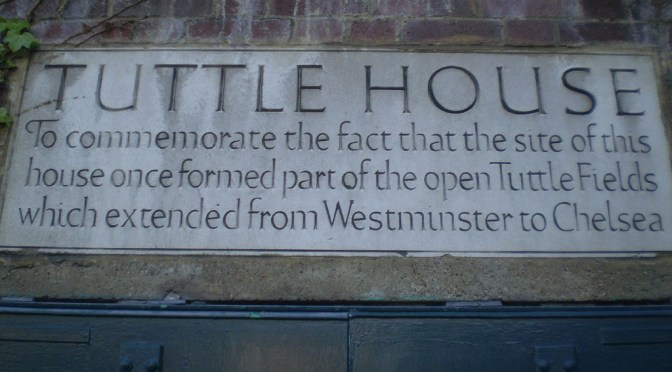
Since the beginning of this year, Dougald has moved from the periphery of my consciousness, as one of those School of Everything chappies to being an important part of my tuttle experience and a bridge to all sort of other interesting people, places and things.
When he saw me writing about the tuttle consulting work and acknowledging the importance of making it up as we go along, he pointed me to more interesting thinking about the social place of improvisation and we agreed to have a chat sometime and make a little podcast. Great idea. Didn’t happen. Until now.
We thought we’d talk for 10 minutes and ended up at 17. However, so much was left that still needs to be said that I’m sure we’ll do some more sometime.
I'm the founder of the Tuttle Club and fascinated by organisation. I enjoy making social art and building communities.


 Perfect Path