Tag Archives: thinking

At Work In The Ruins, Dougald Hine, 2023

ruins-os-status
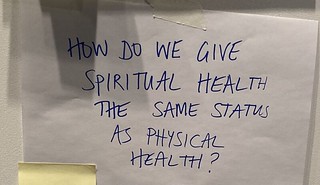
“How do we give Spiritual Health the same status as Physical Health?” a session called at an Open Space on Infrastructures of Care, in response to “At Work In The Ruins”.
London, 8th February, 2023

This week, I’ve finished reading Dougald’s excellent book. (also on Audible, read by the author). I don’t really do book reviews – this is more some initial notes after reading.

The book’s subtitle is “Finding Our Place in the Time of Science, Climate Change, Pandemics and All the Other Emergencies” so yeah, “all the *other* emergencies”.

I’ve tried talking about this as the “global polycrisis” in my day job at church – lol. It’s clear to me that we need better ways to make sense of this because we think we’re good in a crisis, that it brings out the best in us, but what we’re seeing now is a seemingly never-ending series of crises and while it *does* bring out good, it doesn’t feel like anyone can keep it up much longer.

It’s a hard word for people to get their heads round, polycrisis, and my explanation (that it’s all the things that we see stacking up in the news every day, while recognising that they’re all interconnected and that the complexity that therefore arises is only going to make for more surprising and potentially horrible events that we keep perceiving as individual crises <breathe!>) doesn’t always help.

Dougald’s book is a wander through many more of the things that are hard for people to get their heads around. It looks at some explanations for how we got here, some critiques of the current ways of looking at the problems we face and some ideas for how to move forward without minimising or continuing to deny the trouble we’re in.

The first two of these cover the period/era/machine/ideology that he refers to as ‘modernity’. So you get to dive into what (or who!) modernity is and how it’s affected the way we think and behave. It is the impending ruins after the end of modernity that the title refers to.

It’s still working it’s way through me, even though I’ve been lucky enough , through my friendship with Dougald, to have been immersed in many of the concepts in the book while he was forming them and writing about them.

I want to lay out here some of the core things that I noticed as I made my way through the book. Lots of reviewers have noted that it’s a poetic piece as well as being a well-crafted argument so some motifs do pop up throughout as the narrative builds and this helped me both to consolidate what I was learning, but also to see how my thinking was being changed.

Predicaments – this was a biggie for me. It refers to John Michael Greer‘s idea of the difference between a predicament and a problem (that a problem has a solution whereas a predicament is something you have to live with and hopefully find better ways of doing so) – it came up many times to remind me that the “problems” that so many of us are trying to “solve” are actually unsolvable predicaments and that all of these are facets of modernity.

“the price others have been paying all along” – one of the rearrangements in my brain that needs to be reinforced is to shake off the idea that “we” (ie people like me) are the only ones who matter. I mean of course, right? But it’s embedded in so much thinking and it also echoes Vinay’s line that “collapse means us having the same standard of living as the people who grow our coffee.” This was a good reminder that whatever we have to go through, much of our comfort still comes at the expense of other people in other parts of the world.

“people who work in places like that” – this generally means people who work in government or public policy. It’s the people who produce policies and statements and thought leadership and other bullshit that claims to improve the world and be “part of the solution” but in reality keeps working against all of our interests. It’s the people who work in places that support the propping up of modernity. I’ve been one of those people and saw myself in the phrase “Those involved in policymaking now thought of themselves as pragmatic technocrats”. It’s a bit of my work (from the nineties) that I need to revisit and think through in the light of where we find ourselves now.

“no left turn” – this helped me reframe my view of my own political activism and how I’ve thought about the world since I was first shaken by exposure to Marxist analysis. There’s a nagging part of me that wants the answer to this whole thing to be socialist revolution but especially since 2015/16 I’ve been as uncomfortable with the certainties of my friends on the left as with those of the people we stand against. This is not to say that we shouldn’t oppose vehemently the policies of the current UK government but we also can’t continue to pick our enemies or bedfellows solely on where they sit on the traditional left/right axis.

Small path(s) – in contrast to the “big path” which is the road we’re on when we imagine that large-scale efforts (even if organised at a small- or even individual-scale) will create a sustainable version of the world which can continue as it has been all along. Often using technologies that haven’t actually been invented yet. It’s the “business as usual, but sustainable at any cost” mindset. I felt reassured that the work I’ve been doing in the last five years, at a local level, building community capacity and the sorts of relationships that ought to be more resilient no matter how poorly the big path solutions serve us. It’s helping me to let go of the fear that in coming here and working in a small-town church I was doing the equivalent of (in Dougald’s words) moving to Devon and retraining as an acupuncturist.

So yeah.

The image above comes from an Open Space that I organised with Liz Slade at Unitarian HQ to welcome Dougald back to London at the beginning of his UK launch tour in February. It was just one of many conversations inspired by the ideas in the book on the day, but there are many, many more to come. I’m looking forward to opening more space to talk about them.
Tony’s Memorial (day 2? or 4?)

It was good to give myself a break over the weekend even if it means I’m thinking about trivial things like day numbering…

Untitled

Having chosen this topic, it was easier for me to tidy up the most immediate stuff around my desk, making a “Tony” box and putting everything else away. But that did also remind me of the sheer amount of stuff that I’m giving myself to work through.

That’s good, it’s a stage in the project, it’s working out the actual scope of something doable in the next four weeks rather than trying to fool myself into thinking I can do the most perfect, most complete job and never have to ever think about any of this again.

One way to come at this is to ask “What would be a good end product, something that you’d feel good about sharing, that was beyond the most basic, but still had room for extension in other projects? What would that end product look like? What elements would it have?” That reminds me that there are roughly three high-level processes to go through, which I will call “Cataloguing”, “Digitizing” and “Presenting Online” – ie a first product would be a complete catalogue of all the things I have, some description or whatever metadata is appropriate and where it is. This is a first round of organisation, going from vaguely-known chaos to some initial structure and some boundary around what’s in and what’s out. It also gives some pointers to where to start with digitisation and how much effort there may be involved. Going through the digitisation not only give us something that looks more like the end product, it helps to refine the catalogue or index and to improve the metadata. Then thinking about how to present it online, how to talk about the stuff, how to link it together into a collection of stories and actually writing those stories.

Having written all of that down, I’m now better informed about the size of the whole thing and the likelihood of completing all that in 28 days is pretty low. So I’ll have more of a think about what I’d be satisfied with before starting to make some lists.


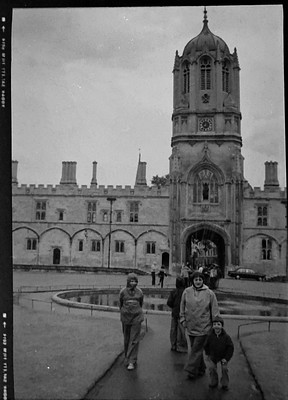
The picture is from a family trip to Oxford in the mid seventies. My brother’s age is probably the best indicator – he was born at the end of 1970 and he could easily be five or six here but probably not seven, so I’d say summer of ’77 (because you know what the British Summer of ’76 was like and it wasn’t wet like this!)

Share Something Every Day – Coding 002

Untitled

I went for a nice long walk this morning, about 5 miles, before breakfast. It was warmer than it has been lately but still cloudy. It’s supposed to get warmer this week.

It was a good space to think about things – especially my desire to make some very simple automation for my blogging. Everything is so complicated and dominated by the various silos. I really ache for the kind of vision of a server, under my control, running software that I understand fully and which only does the things that I want it to do, so that it serves me, rather than me having to bend my style of writing and capturing into someone else’s way of thinking.

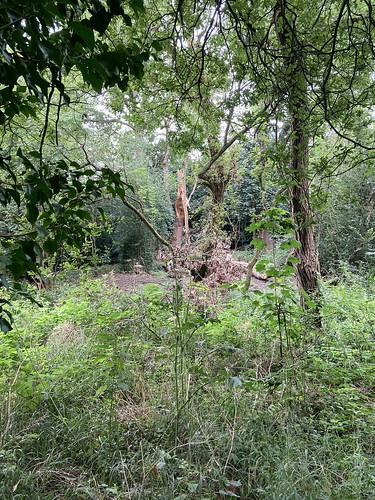
I walked for 45 minutes and then turned round (took a photo to remind me of how far I’d gone – above) and walked back, talking into my phone about the things that I’d been thinking about. It works so much better for me to record like that. I haven’t listened back to it. It’s likely to be atrocious quality, but it gives me the chance of getting something done before breakfast that I haven’t done for a while. I’ll see if I can get better at doing that – and better at grabbing bits of audio as I go, to avoid the gross feeling that comes when I think about making a podcast. In the meantime, I think I’ll feed it to otter.ai and see what kind of transcription it can make of it.

I spent the rest of the day reading up and making notes on node.js and how it works. Patiently just plodding through the Hello World examples and seeing where I could break them or find ways that they didn’t work as I expected so that I could see how they do work. Standard.

That gave me a bit more confidence reading some other people’s code on GitHub and I realised that I have looked at similar things before, just given up when my brain started hurting and run away screaming. Much better these days. I got a couple of examples running on my Mac here and then spun up a cloud server to prove to myself that it really would work over the net 🙂

Still very early days and baby steps, but I’m much more confident that I can make something work. And that I can strip away pointless stuff in other people’s software to just provide the functions I want – really old school, but also using the computers to do the hard work that they’re suited to and not being dominated by some silo providers business model.

Nothing to show yet, but a good progress day.

On Toilet Paper

2020-03-06_21-03

I’ve seen a few people on FB asking “Why on earth are people hoarding toilet paper?” or else “Why are people panic-buying toilet paper?”.  My intention here is not to put these people down, but to try to unpick what I think is going on here.

In Facebook bubble world, the hot-takes in response to these questions are mostly “people are selfish and only think of themselves” or “people are stupid and only do what they’re told by the media”.  In other words “other people” (it’s always someone else of course, nobody’s owning up to wheeling out 100 toilet rolls themself) are the problem and they’re simply conforming to the types that we already hold dear.

The other possible reason I can see is “because everyone else is”.  This is the herd mentality and it’s a little different from “because the media told them to”.  It’s hard for any of us (assuming we’ve money in our pocket) to resist taking a packet of toilet rolls whether we need it or not if we happen to see that the shelves are emptying.  Arguably talking about it on Facebook in these terms is driving more unneeded purchases because we’ve all seen that everyone else is “panic buying” and we need to get in there ourselves.

We don’t know, by the way that anyone is either “panic buying” or “hoarding” – these are phrases that we use freely though to explain why things aren’t on the shelves.  I think the likely scenario is much calmer.  People are doing their normal shopping, heading for the bathroom supplies aisle and picking up an extra hand soap and a larger than normal pack of toilet paper, no panic or hoarding involved, just a shift in the pattern of demand.

I think all of these explanations are part of the picture, but not the whole thing.  Some people are stupid, some people do behave extremely selfishly, unconscious purchasing happens all the time to all sorts of people – some people, for example, have all sorts of worries and feelings and habitually salve those feelings by buying stuff they don’t want and don’t need.  We all know (and, at times, can be) those people.

Isn’t it interesting though that we look first to blame individuals and try to discern why they are behaving badly?

Another way of responding to the empty toilet paper shelves is to ask “Is toilet paper just that supermarket product which is the most sensitive to fluctuations in demand?  Is there something in the system of toilet paper supply that means that if people buy just a little more than usual, shops run out of it more quickly than anything else?”

All of which reminds me of a campaign a couple of years ago that involved buying up toilet paper to highlight the fragility of the supply chain with the idea that this would show us all how dangerous a no-deal Brexit would be.  (Found it: Bog Roll Buy Up)

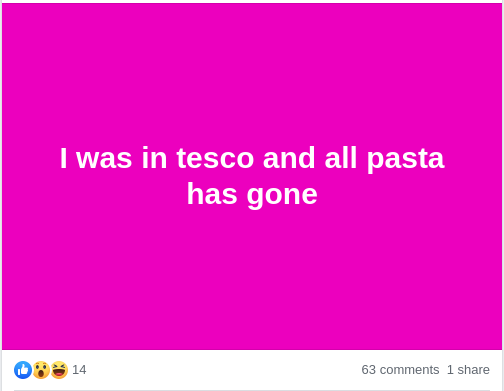
So is toilet paper the top of the list?  Is there a list?  A league table of products in order of their sensitivity to demand?  And if there is such a list what’s next?  Initial ranting on Facebook, at least in the Guildford area, would suggest it might be pasta (though I’m suspicious of the screengrab illustrating this post which reports that Tesco has run out of pasta completely.

It’s doubtless more complex than this – ie there will be products that are more sensitive to different kinds of crisis but I’d like to know if someone routinely does this kind of research so that we don’t have to construct it experientially as the latest wave of apocalyptic disaster unfolds.  If we have a good list we can measure the level of disaster by which shelves are empty. “Oh you think this is bad, I remember one time, you couldn’t even get tinned tomatoes for love nor money!”

In the meantime, please stay safe, don’t get into fights over tissue paper and please wash your hands, especially if you’ve run short of toilet paper and are having to “substitute”.


Wandering in the woods

I’m remembering after the relative structure of commuting to Sittingbourne for #workshop34 that just wandering is an important part of my practice – it’s a way of processing what’s been going on and that I have places to go locally that are great for reflection and self-restoration.  I’m also cheered to remember that I carry some high-quality multi-media content production equipment everywhere I go.

So I denied myself a walk in the woods over the weekend but by Monday it was irresistible and when I got there, these words fell out of my mouth.  Here’s video and audio for those who still subscribe to the podcatching form of distribution.

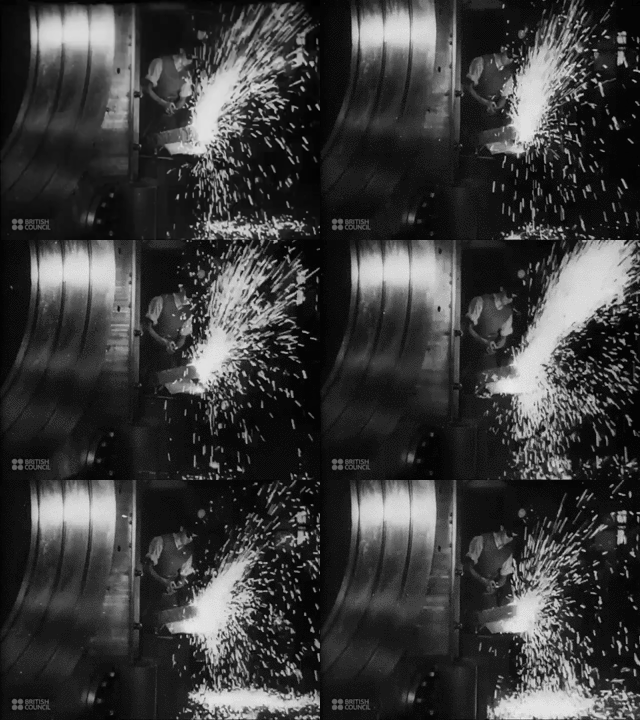
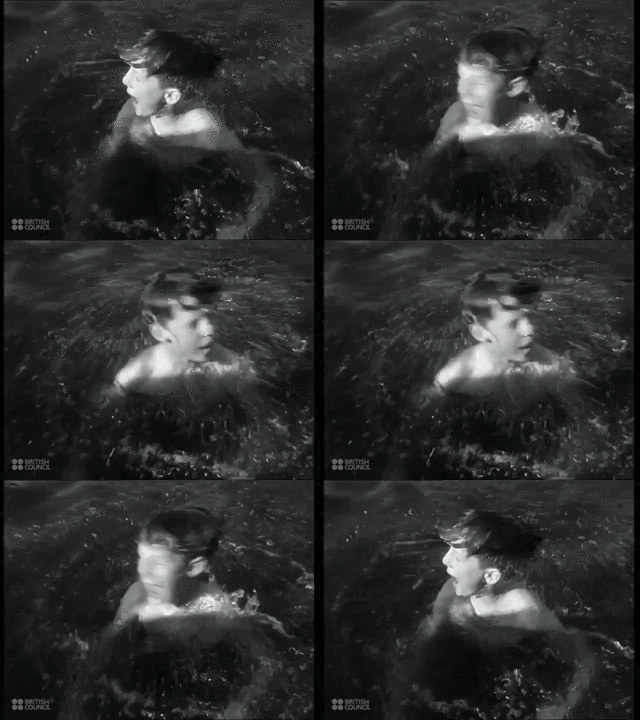
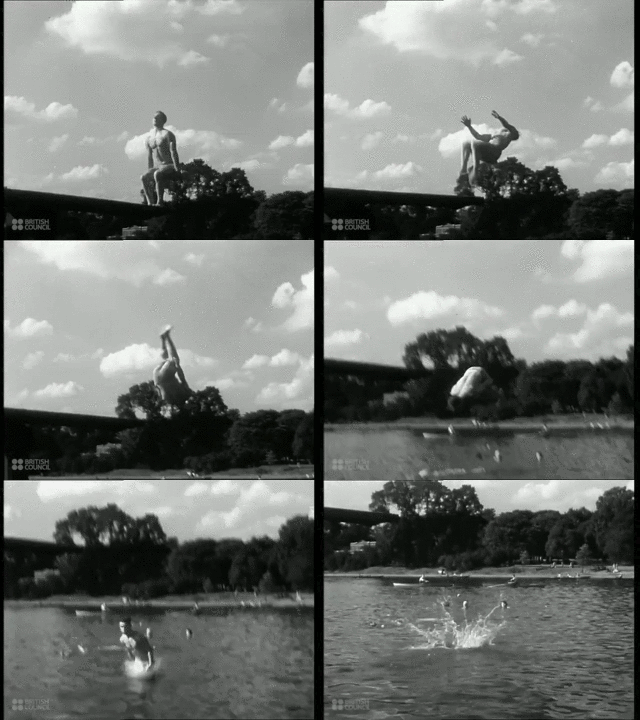
Playing with GIFs from archive film ( cc @time_image )

I don’t know what I’m trying to do!

I’m just playing really, but I think there’s something in here – look at how current popular media gets scrunched into little animated GIFs – does that only work for stuff that’s around now or that we’ve some connection to? Isn’t there still some fun in seeing loops of little scenes that we’re not so familiar with? I’ve been looking through the stuff in the British Council Collection which is all BY-NC licenced

So far I’ve just picked out scenes that I think would look good as a loop. But there’s also that gifset thing where you can sum up a sequence made up of little bits (often with subtitles for the key dialogue) I may try that sometime.

sparksshakes

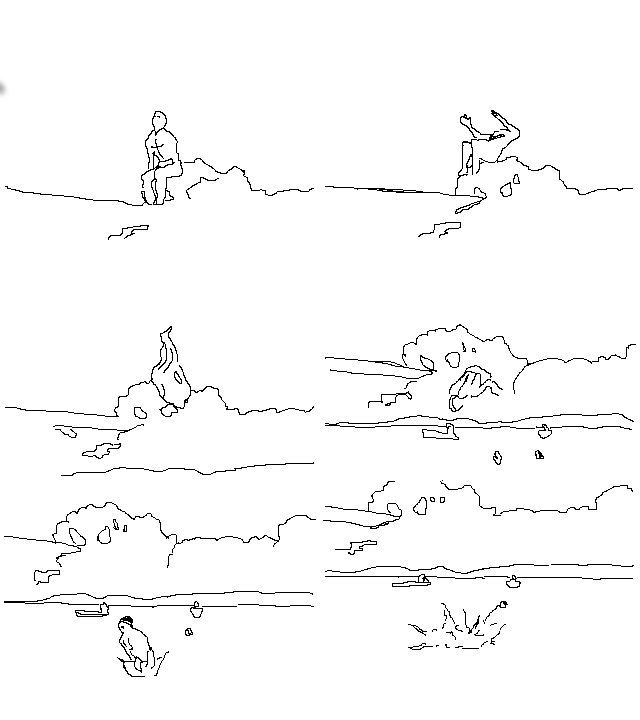
Today I also had a go at making something else: a loop of tracings from a scene

traced30dive30


I should write up a bit more about how I did that, but if you’re interested there’s more of this spilling out into my tumblr all the time.

Keeping out of the gutters

I was struck by a piece by Scott Walker a few weeks ago on the use of the gutter in comic-strips and relating it to transmedia storytelling. I identified with it immediately because I know that the space you leave between the things you articulate are hugely fertile places – our minds are great at filling in the gap between A and B. Storytellers have exploited this by setting the audience up with a series of scenes that lead you to a certain conclusion and then revealing something that was left out that turns the plot around completely. In great detective novels for example the truth becomes clear when we find out exactly what happened between B and C rather than what we’d taken for granted and therefore Y to Z makes perfect sense.

I’ve applied this to Tuttle. When we started I made up some simple boundary conditions that I wanted to hold and I reinforced them over time: minimal structure; no-one grabs attention; regular meetings; as free at the point of access as possible; it isn’t for everyone but it is for anyone, etc. and theen I let you all make up the “rules” or ways to behave that make sense to you. I think this is the best way to make co-creation work.

And with Tuttle it still works: it leads to conversation that draws out and articulates what we can agree on – just such a conversation happened this week about moving Friday mornings to another location, out of which came the insight that maybe Tuttle needs a social space to feel comfortable in. We’ll keep this conversation going. It isn’t finished – that’s because the gutters are fractal – everytime you fill the gap between A and B with X you actually create two new narrower ones A-X and X-B and so we continue on.

So my favourite advice to people thinking about co-creation is “Pay as much attention to the gaps you leave as to the structure you build”

But this brings to light an error in how I’ve unconsciously applied this to everything I do, particularly in the narrative I create about myself when marketing the things I do. I realise that it’s not obvious how Tuttle arose out of my previous work, nor how Tuttle the meetup relates either to Tuttle Consulting nor to Tuttle2Texas – it’s clear perhaps that I’m involved, but how are they Tuttle things – and what’s all this art stuff about?

So there’s more to say on each of those than fits in a Monday morning blogging session. However, I offer the following observations relating to keeping wide gutters between things:

  1. Some (maybe lots of) people just give up trying to work it out, it’s too hard – this means they give up on the story altogether.
  2. People make up the stuff based on their own experience and that can have positive and negative consequences for someone trying to maintain a narrative.
  3. People vary in their ability to give up a bridging idea that they’ve constructed, but most hold on pretty tight.

PS I recognise that I might not have completely recovered from this – ie I’m leaving holes that might be too big for you to traverse right now. Sorry, one blog post at a time 🙂

PPS there may be some more clues in my soon-to-be-launched newsletter – sign up here